
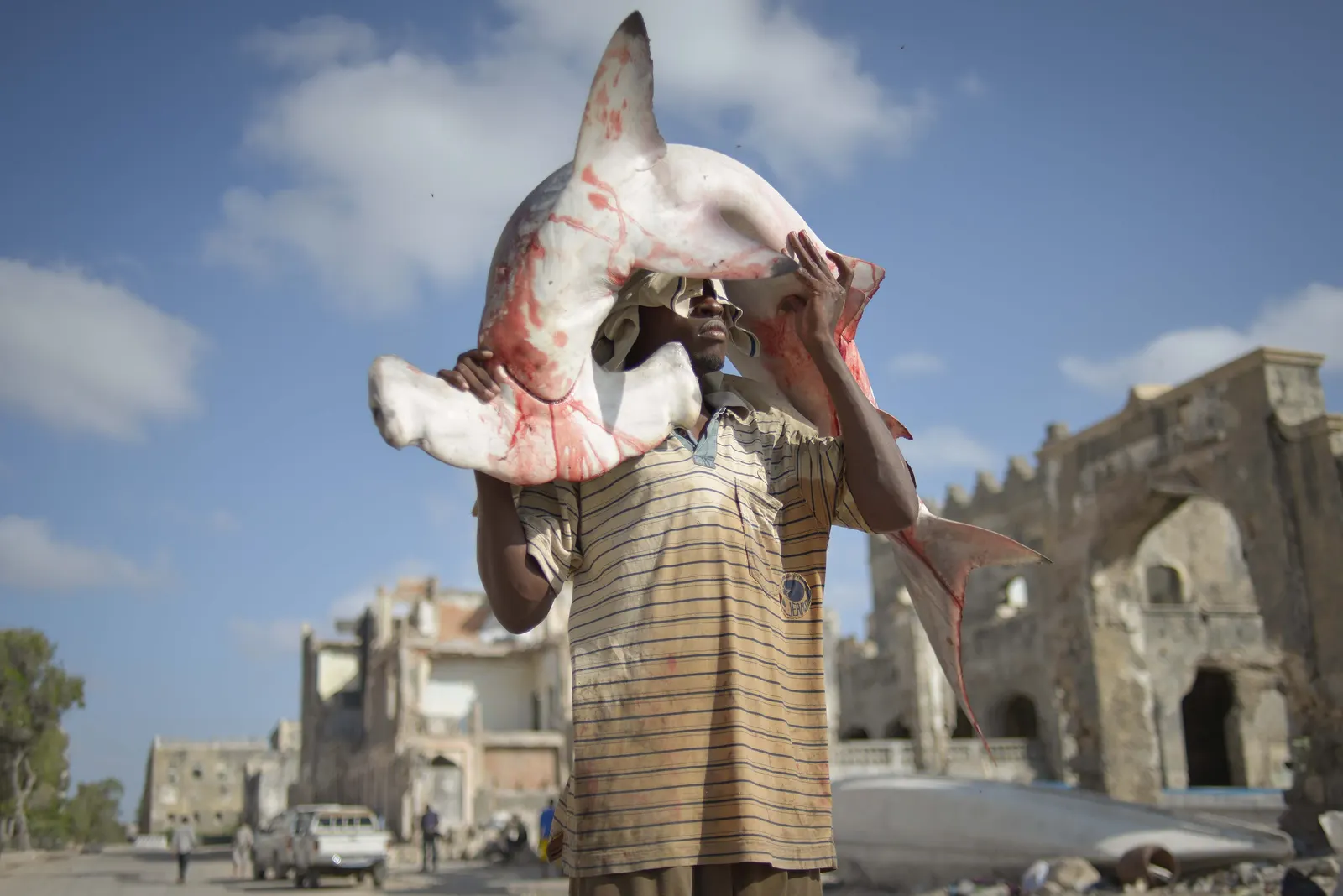
Below the coral-stone walls of Hamar Weyne, the old port is where wooden fishing boats come in each morning. Their catch — tuna, kingfish, snapper, lobster and sometimes sharks — is carried straight up to the nearby fish market, where traders and restaurant buyers bargain over the day's haul.
Somalia has the longest coastline in mainland Africa, and this market is the best place to see how much the sea still shapes life in the capital.
The port through history
For centuries Mogadishu's harbour was an open roadstead below Hamar Weyne and Shangani: ships anchored offshore and small boats carried goods to the beach. The old port served the city's trade with Arabia, Persia and India. Today large ships use the modern deep-water Port of Mogadishu further along the coast, but the old waterfront remains the home of the fishing fleet.
What happens at the market
Boats return from the night's fishing at dawn. Porters carry the catch up the beach to the market hall, where traders and buyers from hotels and restaurants inspect, weigh and bargain over tuna, kingfish, snapper, grouper, lobster and prawns. By mid-morning much of the best fish has gone — to restaurant kitchens and family tables across the city.
Visiting
The market is on the seafront below Hamar Weyne, about 5 km north of the airport. It is a working market: wear closed shoes, expect wet floors and strong smells, and keep out of the porters' way. Ask your driver or guide to come with you.
Visiting tips
- Arrive early, around sunrise, when the boats come in.
- Ask before photographing people at work.
- Pair it with a walk through Hamar Weyne's lanes.
Photos
Map
Was this guide helpful?